%20(1).png)
%20(200%20x%20850%20px)%20(87%20x%20373%20px)%20(373%20x%20.png)
Andy Williams Jr., the Role of Attorney General, and the Growing Accountability Gap
- Seth Phillips
- Jan 28
- 5 min read

Across the United States, confidence in public institutions has declined steadily for decades, but recent years have marked a deeper rupture. Americans are not merely dissatisfied with outcomes. Increasingly, they question whether the system itself is responsive to them at all. This erosion of confidence has produced what many political scientists describe as a crisis of accountability, where formal authority persists but public legitimacy weakens.
This phenomenon is not limited to partisan frustration. It appears consistently across demographics, geography, and ideology. People still vote, still engage, and still care about public life. Yet a growing share believe that elected officials do not answer to ordinary citizens and that institutional power has become insulated from consequence.

Long-term data from the Pew Research Center illustrates the depth of this shift. Trust in the federal government peaked near 70 percent in the late 1950s and early 1960s. Since then, it has declined in waves, reaching historic lows in the 2010s and 2020s. By 2025, fewer than one in five Americans reported trusting the federal government to do what is right most of the time or always.
This decline matters because trust functions as a form of institutional currency. When trust collapses, legitimacy follows. Political scientists consistently find that citizens who perceive institutions as unaccountable are less likely to view laws as fair, less likely to cooperate with enforcement, and more likely to disengage from civic life.
The Accountability Gap and Representation
Distrust alone does not explain the current mood. The sharper issue is representation. In a 2023 Pew Research Center survey, 85 percent of Americans said elected officials do not care what people like them think. That figure has remained remarkably stable across partisan lines, suggesting that dissatisfaction is systemic rather than ideological.
This perception creates what can be described as an accountability gap. Officials retain legal authority, but citizens no longer believe those officials feel answerable to them. Over time, this gap reshapes how voters evaluate leadership. Policy specifics become secondary to questions of responsiveness, transparency, and consequence.
Political accountability theory defines accountability as a relationship in which power holders must explain and justify their actions to an audience that can impose consequences. When citizens believe that explanation and consequence are absent, the relationship breaks down, even if formal democratic mechanisms remain intact.
Trust Shifts Toward State and Local Institutions
Interestingly, this collapse in trust is not evenly distributed across levels of government.

Survey data consistently shows that Americans place more trust in state and local governments than in federal institutions. While trust at all levels has declined, local government remains the most trusted, followed by state government, with the federal government ranking last.
This pattern suggests that accountability feels more plausible when power is closer to daily life. People may distrust Washington broadly while still believing that state and local officials can be reached, challenged, or influenced.
Statewide offices, including the attorney general, sit at the intersection of these dynamics. They are powerful enough to shape enforcement priorities and oversight, yet close enough to affect everyday concerns like consumer protection, public safety, and civil rights enforcement.
The RISE Leadership Conference and a Case Study

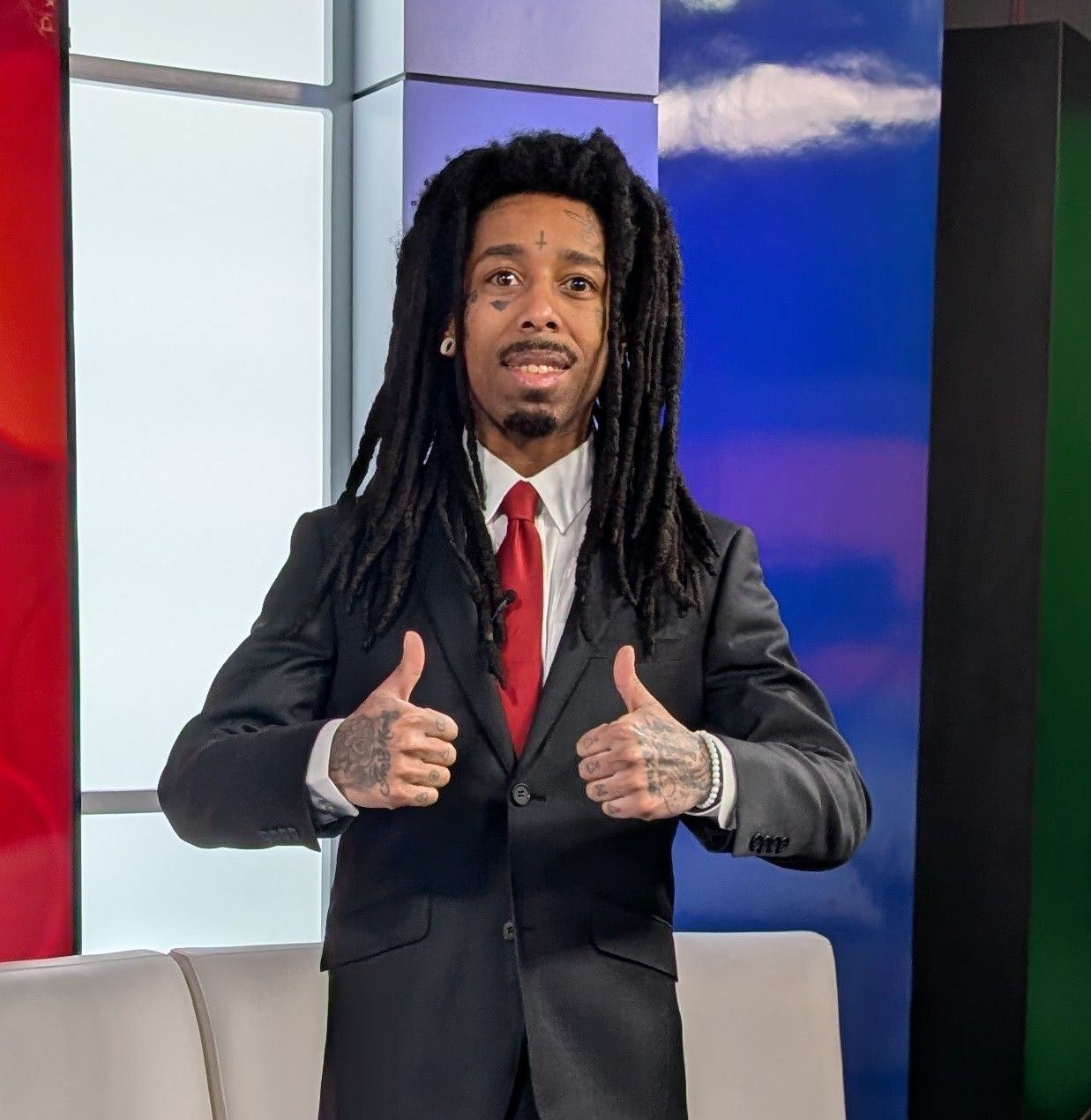
These issues were prominent at the 2025 RISE Leadership Conference, where speakers repeatedly returned to questions of legitimacy, trust, and responsibility. It was in this setting that I spoke with Andy Williams Jr., who is running for Attorney General in Illinois.
Williams framed his candidacy around the idea that elected officials have overtaken the role of the people and that accountability has weakened across government institutions. He emphasized that rights do not originate from government and that public office exists to protect those rights rather than redefine them.
While readers may differ on the philosophical framing of that argument, the underlying concern aligns closely with public opinion research. Large majorities of Americans believe that institutions no longer listen to people like them and that officials face little consequence when they fail.
What the Attorney General Actually Does
The role of attorney general is often misunderstood, despite its broad influence. Constitutionally, the attorney general serves as the chief legal officer of the state, with powers defined by law. In practice, attorneys general act as primary enforcers of consumer protection statutes, pursue civil actions related to fraud and corruption, and represent the public interest in litigation.
According to the National Association of Attorneys General, state attorneys general are often the first line of defense for consumers harmed by deceptive practices and play a central role in enforcing civil laws that shape public trust in markets and institutions.

Gallup data illustrates how Americans differentiate between institutions. Local government consistently ranks higher in public confidence than Congress or federal agencies. This distinction reinforces why offices with direct enforcement authority matter so much in an era of declining trust.
When citizens feel protected by enforcement mechanisms, trust stabilizes. When enforcement feels selective or distant, legitimacy erodes.
Accountability, Enforcement, and Public Safety
Williams also emphasized the relationship between accountability and public safety. Research in public administration supports this connection. Studies show that when institutions are perceived as fair, transparent, and consistent, public cooperation increases and civic trust strengthens. Conversely, when enforcement appears uneven or unaccountable, compliance declines and polarization intensifies.
This dynamic helps explain why accountability has become a unifying demand across diverse political coalitions. People may disagree about policy outcomes, but they broadly agree that institutions should explain their actions and face consequences when they fail.
A National Pattern Beyond One Campaign

Williams’ campaign reflects a broader national pattern. As trust in institutions declines, candidates increasingly frame their appeal around accountability rather than ideology alone. This shift is visible across parties and offices, from prosecutors to governors to state attorneys general.
The public is not simply asking for new leaders. It is asking for institutions that feel responsive, transparent, and answerable. Accountability has become a measure of legitimacy rather than a rhetorical flourish.

Gallup research shows that trust fluctuates depending on party control, further reinforcing the perception that institutions serve factions rather than the public as a whole. This volatility deepens skepticism and heightens demands for accountability mechanisms that transcend partisan alignment.
Closing the Accountability Gap
The accountability gap does not close through rhetoric alone. It narrows when institutions demonstrate transparency, enforce laws consistently, and remain responsive to public concern. It also narrows when citizens engage with a clearer understanding of how power functions and where influence can be applied.
The office of attorney general occupies a critical role in this process. Its authority reaches into areas that shape daily life, from consumer protection to public safety to civil enforcement. In a period of declining institutional trust, offices with real enforcement power become focal points for public expectation.
Whether or not voters agree with Andy Williams Jr.’s philosophy or campaign, his candidacy illustrates a broader civic reality. Accountability is no longer a secondary concern. It has become a central demand shaping how Americans evaluate leadership and legitimacy in public life.
References
Pew Research Center. Public Trust in Government: 1958 to 2025.
Pew Research Center. Americans’ Views of Government Responsiveness, 2023.
Gallup. Trust in Government and Institutions Polling, 2024–2025.
National Association of Attorneys General. Role and Responsibilities of State Attorneys General.
ONEnetwork News Team
ONEnetwork is committed to thoughtful, independent reporting that prioritizes civic understanding, institutional accountability, and community impact. Our coverage focuses on examining the systems and decisions that shape public life through analysis, interviews, and research-informed journalism.


%20(200%20x%20850%20px)%20(2).png)
Comments